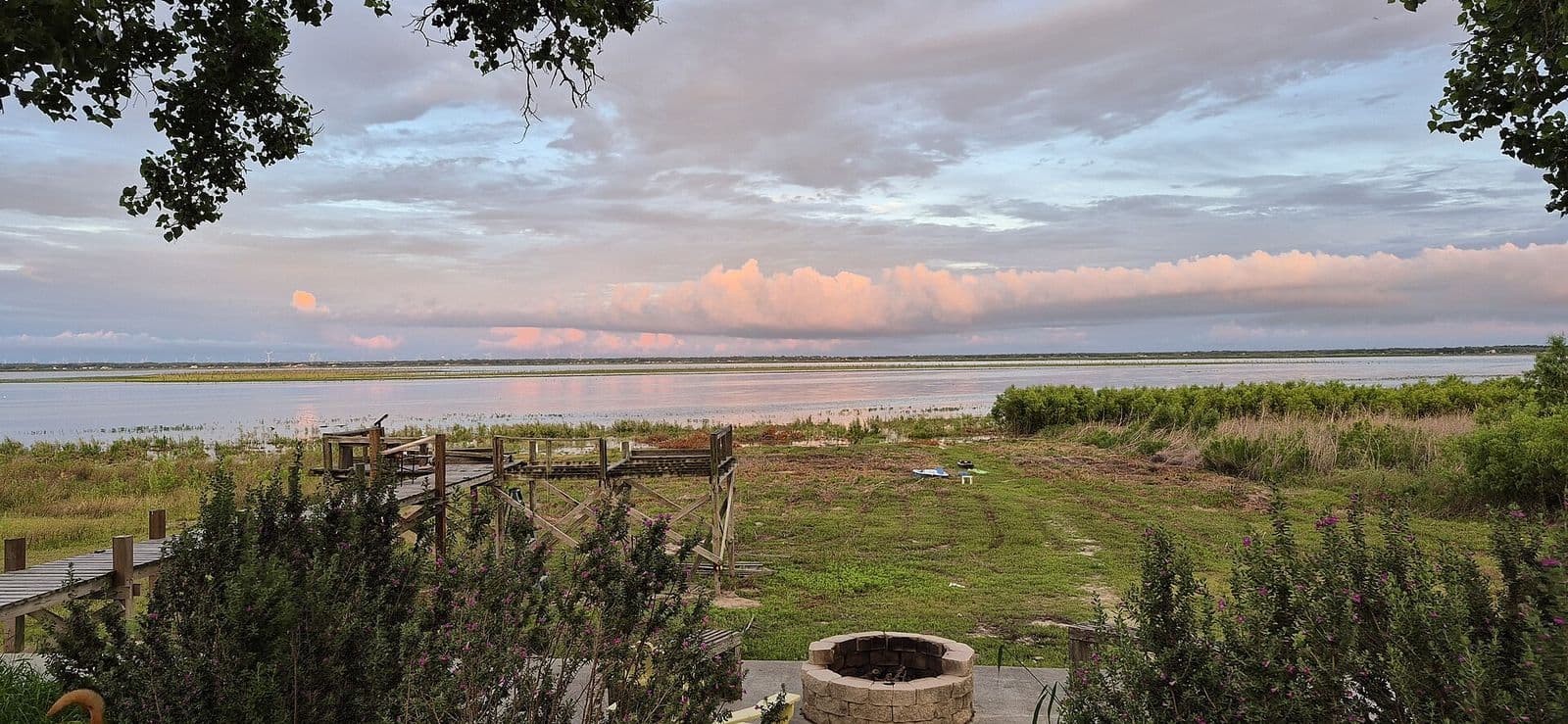
Trade the commute for a coastline
People move to the Coastal Bend for the beaches and stay for the cost of living, the community, and the fact that 'going to the lake' means going to the Gulf. This page is the honest version: costs, insurance, jobs, schools, and storms.
The short version
No state income tax
Texas keeps more in your pocket; cost of living sits below the U.S. average.
Sunny most of the year
Mild winters and a constant Gulf breeze. 'Winter Texans' aren't wrong.
Weekends on the water
The beach, the bay, and the best fishing in Texas are part of daily life.
Real, steady industries
Energy, the port, healthcare, military, and education anchor the economy.
What it really costs
The headline is affordable — with one big asterisk for coastal insurance. Budget honestly and the math works out.
Overall cost of living
Below U.S. average
Corpus Christi runs a touch under the national average — and well below Austin or Dallas — though Island waterfront homes carry a premium.
Typical home price
$250k–$350k
Citywide median sits in the mid-$200s. Canal-front Island homes and Port A beach houses run higher; inland suburbs run lower.
State income tax
None
Texas levies no personal income tax. Property tax rates are higher to compensate, so budget for that line item.
Insurance reality check
Plan ahead
Windstorm and flood coverage are facts of coastal life. Get quotes early — they vary a lot by elevation and distance from the water.
Figures are general ranges to set expectations, not quotes. Always verify current prices, tax rates, and insurance for a specific address before you commit.
Who's hiring on the coast
This is a working port city, not just a resort town. The economy leans on energy, healthcare, the military, education, and a growing clean-energy sector.
Port of Corpus Christi
Largest U.S. energy export port
NAS Corpus Christi & Army Depot
Military & aviation
CHRISTUS Spohn Health System
Healthcare
Driscoll Children's Hospital
Healthcare
Refineries & petrochemical
Energy & manufacturing
Texas A&M–Corpus Christi
Education ('Island University')
CCISD & area school districts
Education
Offshore wind & clean energy
Emerging sector
Subtropical, breezy, and honest about hurricanes
Mild, short winters and long warm seasons — with a hurricane season you plan around rather than fear.
Spring
70s–80s°F
Arguably the best season — warm water, wildflowers, and spring break energy in Port A.
Summer
90s°F + humidity
Hot and sticky, cooled by a steady Gulf breeze. Peak beach season; watch the UV and hydrate.
Fall
70s–80s°F
Warm water lingers, crowds thin out, and the fishing is excellent. Keep an eye on hurricane season through November.
Winter
50s–60s°F
Mild and short. A few cold fronts blow through, but 'Winter Texans' arrive for a reason — beach walks in January.
Six steps to landing here
Six steps, in the order that saves you money and grief.
Scout the right area first
Island life, suburban Southside, family-friendly Calallen, or a Port A beach house all feel different. Visit a few neighborhoods before you commit.
Run the true coastal budget
Texas has no income tax, but factor in property taxes plus windstorm and flood insurance. Get insurance quotes for any specific address before you buy.
Line up work or remote setup
Energy, healthcare, military, education, and tourism anchor the economy. Internet is solid in town — confirm service for rural or far-Island addresses.
Check schools by district
Flour Bluff, Calallen, and parts of CCISD each have standout campuses. Zoning matters, so map schools to the exact home.
Plan for hurricane season
June through November, have an evacuation plan, an insurance binder, and a go-bag. Locals take it seriously and so should you.
Show up and get coastal
Get a fishing license, learn the tides, find your taco spot, and say yes to the first sunset on the seawall. You'll be a local by season two.
Getting connected
The main cable and fiber internet provider in Corpus Christi and on the Island — locals still call it Grande. Check availability for your exact address early — far-Island and rural addresses are the ones that surprise people.
Referral link: signing up through it supports this free guide at no extra cost to you. Internet is just the start — see the full newcomer services list.
Not sure where to land?
The Island, Flour Bluff, the Southside, Calallen, downtown, or a Port A beach house each feel like a different life. Compare them side by side.
Frequently asked questions
Is North Padre Island the same as South Padre Island?
No — and it's the single most common mix-up. They're opposite ends of the same long barrier-island chain, separated by the man-made Port Mansfield Channel and well over 150 miles apart by road. Padre Island National Seashore, near Corpus Christi, is on the north end and does not reach South Padre Island (the resort town near the Mexico border). There's no direct road down the island between them, so make sure your flights and hotels point to the right end.
What's the difference between the Island, Mustang Island, and Port Aransas?
North Padre Island and Mustang Island are neighboring barrier islands connected by road. Corpus Christi's neighborhoods sit on North Padre; Mustang Island sits just north and is home to Port Aransas ('Port A'), a separate beach town reached by a short, free ferry from the mainland — or by road straight up the islands.
Is it expensive to live here?
Corpus Christi's overall cost of living is near or just below the U.S. average and far cheaper than Austin, Dallas, or Houston. The catch is coastal insurance — windstorm and flood coverage — and a premium for waterfront Island homes.
How bad are hurricanes?
Hurricane season runs June through November and is a genuine part of coastal life. Major storms are infrequent but real (Harvey in 2017 hit nearby Rockport hard). Build it into your insurance, your home choice, and your evacuation plan rather than ignoring it.
Can you really drive on the beach?
Yes. Much of North Padre and the National Seashore is open to driving on the sand. You'll want a beach parking permit for some areas, and 4WD for the soft sand beyond the first five miles of South Beach. Air down your tires and check conditions first.
Is there more to do than the beach?
Plenty — the Texas State Aquarium, USS Lexington, serious birding and fishing, Selena heritage sites, a reviving downtown bayfront, festivals, and Texas A&M–Corpus Christi all add up to a real city, not just a strip of sand.